Preserving Appalachia
03 Jun 2026
WNC From the Ground Up is saving mountain farms
Plateau Magazine June-July 2026
Written By: Emily Davis | Images: Emily Davis
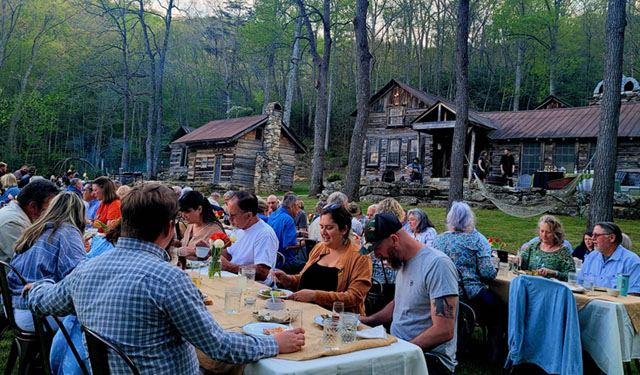
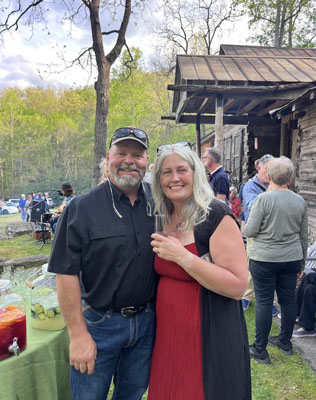
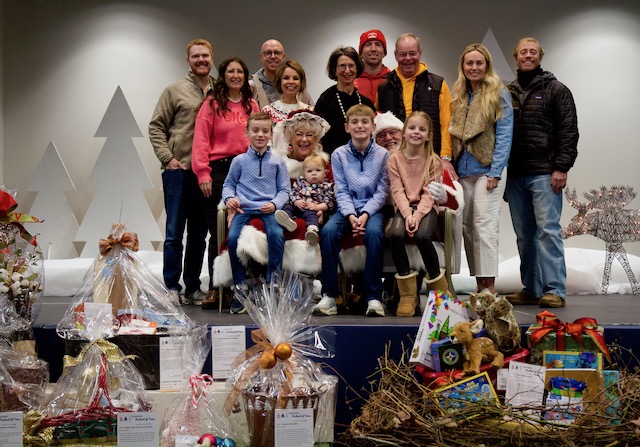
Lisa Kelly, of WNC From the Ground Up, has some of the bluest eyes you will ever see. On this evening, at the organization’s farm-to-table dinner held April 18, they well up with tears as she thanks guests for their support. “This isn’t just about farmland. This is about preserving Appalachia,” she informs us with conviction.
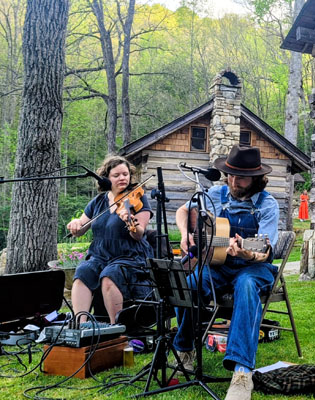
Grassy Creek sets the stage for tonight’s dinner, with guests following a hand-drawn map to reach a destination unknown to GPS. Vivid green pasture, cerulean sky, a burbling creek tumbling down the hillside, and historic log cabins provide the backdrop for a gathering that can only be described as surreal. It could be 2026, or it could be 1850; an outdoor feast in such a remote location feels timeless.
The meats roasting over an open fire and the vegetables assembled into tasty salads were all raised and grown regionally. This meal is designed—or shall we say “undesigned”—by taking what is seasonal and available and assembling it into a sublime experience, simultaneously simple in origin and indulgent in quality and flavor.
“Food is culture,” Lisa tells me when we speak later. I laugh because the words had just been on the tip of my tongue. Even though WNC From the Ground Up primarily focuses on local farming, everything from their fundamental mission to the dinner itself is underscored by the Appalachian way of life.
It’s that mission that fuels everything Lisa and her husband, Jason, aim to accomplish by building new systems while preserving tradition.
“In 1951, Jackson County described itself proudly as ‘a scenic mountain county of diversified farming.’ Seventy-two years later, the 2022 USDA Census of Agriculture told a different story... one of profound contraction in land, livestock, crop diversity, and the farm families whose lives were rooted in this soil,” Lisa writes, regarding a recent report that, “we believe every commissioner, planner, farmer, and neighbor in this county should read.” The organization has tracked these, and many other, alarming changes:
» 50,000 acres of working pasture gone (52,352 in 1950 to 2,354 in 2022)
» 278,000 acres of total farmland lost (more than 300,000 in 1950 to just 22,208 in 2022)
» A near-disappearance of pork production (3,617 hogs in 1950 to just 20 in 2022)
» In 1950, 1 in 10 county residents worked a farm; by 2022 that figure had fallen to fewer than 1 in 100
But why does it matter? After all, food can be grown elsewhere, transported here, and purchased in grocery stores.
“We have a really short memory,” Lisa explains. “Supply chains are fragile, and we’ve seen how they can be disrupted. We saw it during the World Wars, but more recently during the pandemic and then Hurricane Helene.”
According to the National Center for Appropriate Technology, most produce travels an average of 1,500 miles before reaching store shelves. Fruits and vegetables are picked long before they ripen and transported on refrigerated trucks, sacrificing nutritional value and flavor. Just four national firms control 80 percent of the meat industry. Eggs are produced in warehouses, and are often several months old before reaching the supermarket. Avian flu outbreaks result in entire flocks culled and the empty shelves of recent memory.
It’s not difficult to imagine the environmental and economic impacts. With one in four Jackson County residents classed as food insecure, we face a real structural problem when farmland disappears or supply chains collapse.
Quite simply put, Lisa says, “We need to feed our own.” The organization provides “education, technical assistance, and resource connections to farmers throughout Western North Carolina, with particular focus on supporting small-scale and beginning producers who face barriers to agricultural success.”
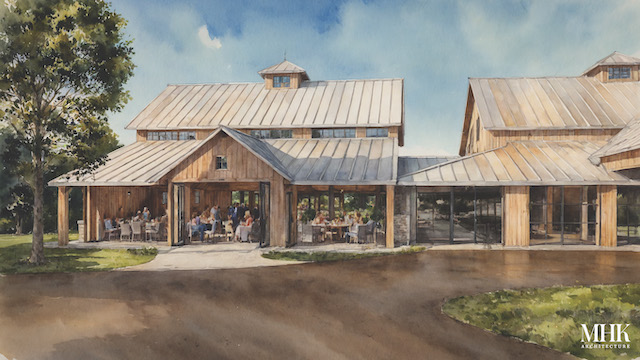
Once produced, food must then be distributed directly and quickly to the public. To that end, WNC From the Ground Up is raising funds to open a regional food hub, located in the old Kel-Save building in Sylva, where local farmers will place their goods for sale and earn 85 percent of the profits—bypassing multiple markup points typical of the larger food chain. Every dollar spent will be retained within the community.
As I tuck into the delectable meal prepared by Chef Santiago Guzzeti of ILDA, the value of locally-grown food becomes clear, and it’s more than a matter of convenience and economics. This food tastes fresher, more real, and alive than anything in recent memory. When produce is plucked straight from the ground and delivered to the dinner plate that evening, the difference is palatable.
Mass-produced factory food is cheap, but the downstream health effects are incalculable, with nutrition lost to the supply chain translating into poor health later. WNC From the Ground Up has partnered in the past with the Healthy Opportunities Pilot Program and the FarmsSHARE program (both ended in 2025). Unfortunately, state programs are always subject to budget shortfalls and political prioritization—all the more reason to build resilient systems locally.
To that end, the organization currently coordinates with MANNA Food Bank and has pioneered its own food-as-medicine program, Nourished From the Ground Up.
The mission of WNC From the Ground Up can be summed up in a quote by Wendell Berry: “You cannot save the land apart from the people or the people apart from the land. To save either, you must save both.”
To learn more about building local, resilient food systems, visit wncfromthegroundup.org.