Seeds of Rebellion
03 Jun 2026
How a pre-Revolutionary protest movement shapes our nation today
Plateau Magazine June-July 2026
Written By: By Emily Davis | Images: photos by James Shaffer; Alamance Battleground; Historic Hillsborough
I hear the rooster crow just before Mama scoops me from my bed. I whimper and push against her; It's chilly this June morning, and I want to snuggle into my bed and sleep.
“Hush now. You can sleep in the wagon,” she tells me. “We have a long ride ahead of us.” We're going to a place called Hillsborough. I've been there once before, to get supplies for spring planting last year. We visited the general store, then— a large store with clothing and food and tools, and big jugs of that whiskey Papa liked, and jars of candies and more dolls and toys than I had ever seen!
But this journey was to be a different one. We were going to say goodbye to Papa. The government men said he did something bad, but I don’t believe it. Papa is a good man.
It’s hot in Hillsborough, and I’m surrounded by the loud, jostling crowd. My brothers and sisters are all taller than me. Mama holds me close to her skirts. She wore her nice Sunday dress today.
“I can’t see,” I complain.
“You don’t need to see,” Mama answers.
I hear men talking, saying words I don’t understand. But then, Papa is singing. It’s that psalm he always sings when he forges his gun barrels.
And suddenly, it’s quiet. Mama’s hand squeezes mine too tight.
— Jonathan Merrill, age 6, June 1771
It is often said that hindsight is 20/20. While we can look back at history and recognize a clear progression of events leading to any major moment, the people alive during those times did not possess a crystal ball and probably were not working from a master plan. We tend to react to events as they unfold, using the knowledge and judgement we possess at the time. Life happens as it does, and we can only piece together the story afterward.
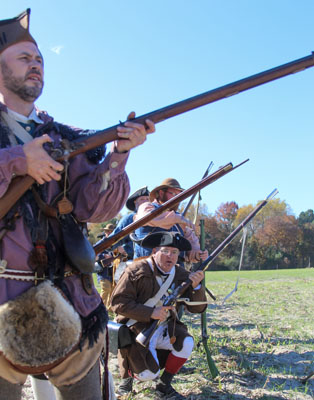
The Regulator movement in colonial North Carolina is often misunderstood as the beginning of the American Revolution, and the resulting Battle of Alamance sometimes misnomered as the first battle of the war. But at the time, defying King George and declaring independence was an unlikely notion in most Regulators’ minds. Instead, “The Regulator Movement was a protest movement,” says Nathan Schultz, site manager of Alamance Battleground. “Regulators were loyal to the king, but they were dissatisfied with how the law was applied locally in North Carolina.”
In fact, Schultz clarifies, “They were protesting some fundamental issues that we’re still dealing with even today.”
It makes sense; when dissatisfied with unfair policies or the appearance of corruption, most rational people won’t immediately rush to the conclusion that the entire government must be overthrown. Instead, we come together over common goals, form a movement, demand accountability, and push for change. The events that follow determine whether the movement fails or succeeds—or what new direction might emerge.
In 1769, seven years before the Declaration of Independence, a petition from inhabitants of Anson County claimed they had “too long yielded ourselves slaves to remorseless oppression” and set forth numerous grievances for which they requested that “your compassionate endeavours may tend to the relief of your injured Constituents, whose distressed condition calls aloud for aid.” The document cited disproportionate taxes, extortion by local lawyers and clerks, and unfair distribution of land grants (ostensibly via favoritism toward friends of the governor and council), among other complaints.
The petition then suggested seventeen remedies, “which will not only tend to our relief, but command prayers as a duty from your humble Petitioners.” The final request is that “Doctor Benjamin Franklin or some other known patriot be appointed Agent, to represent the unhappy state of this Province to his Majesty, and to solicit the several Boards in England.” These Regulators, largely composed of humble backcountry farmers, were merely asking for a voice in shaping the colony's future.
Hardly a call to arms and anarchy! What is striking about the petition is the earnestness with which the petitioners pursued fair application of the law. One wonders how differently history might have unfolded had these concerns been addressed and resolved.
By 1770, numerous such petitions had been filed, each one largely ignored. The lack of reply from the royal government only fanned the flames of discontent, and by this point, the Regulators had evolved a highly organized reform movement, formed committees, and appointed chiefs and captains. Two men friendly to the Regulators, including preacher and writer Herman Husband, had been elected to the General Assembly, but they were unable to effect change.
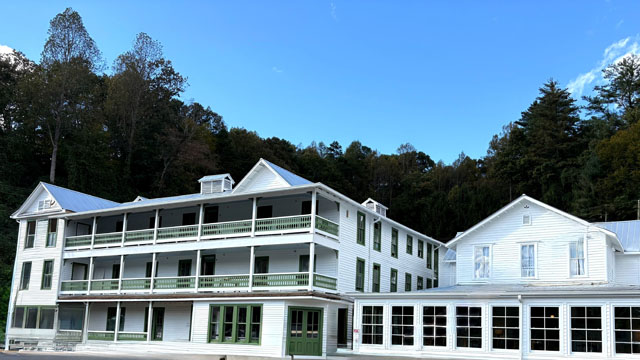
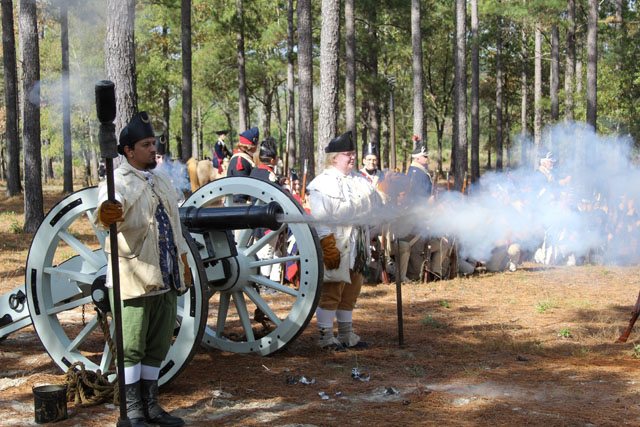
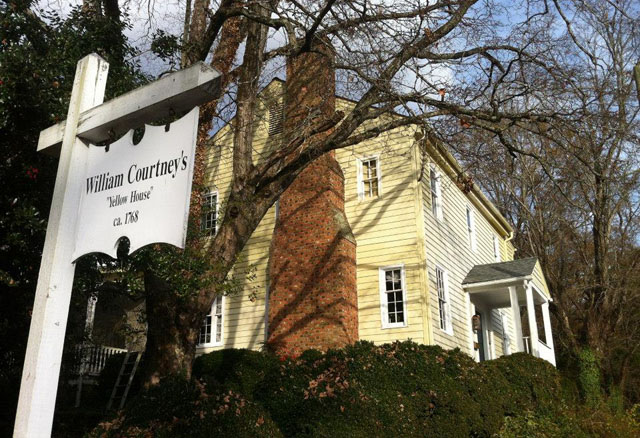
In September of that year, with patience worn thin, a group of Regulators attacked officials at the courthouse in Hillsborough and issued a severe beating to those they believed to be corrupt, including Edmund Fanning, a Crown Attorney and friend of Governor Tryon. This time, their actions earned a swift response; the government raised a militia of 1,000 men and eight cannons aimed at suppressing the movement.
Tensions finally exploded on the morning of May 16, 1771. After a final petition to the governor, which was subsequently ignored, about 2,000 Regulators gathered to protest just south of Burlington. Many arrived unarmed, simply lending their voices and presence.
Governor Tryon finally answered, via the sheriff of Orange County:
"Great Alamance Camp, May 16, 1771:
In answer to your Petition, I am to acquaint you that I have ever been attentive to the true Interest of this Country, and to that of every Individual residing within it. I lament the fatal Necessity to which you have now reduced me, by withdrawing yourselves from the Mercy of the Crown, and the Laws of your Country, to require you who are Assembled as Regulators, to lay down your Arms, Surrender up the outlawed Ringleaders, and Submit yourselves to the Laws of your Country, and then, rest on the lenity and Mercy of Government. By accepting these Terms in one Hour from the delivery of this Dispatch you will prevent an effusion of Blood, as you are at this time in a state of War and Rebellion against your King, your Country, and your Laws."
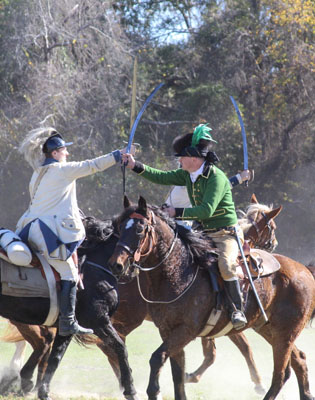
The governor’s militia demanded that the Regulators disperse. Their answer? “Fire and be damned.” Whether the words were intended as a threat or mere bravado, the outcome was brutal: One hundred Regulators dead, two hundred wounded, and many captured. One man, James Few, was executed the following day.
Captain Benjamin Merrill, of the Rowan County militia, was still en route to the camp with approximately 300 of his own men. They never arrived. Within two hours, the Battle of Alamance was over, and the Regulator movement crushed. Despite his lack of involvement in the actual battle, Merrill was one of the dozen later captured and sent to trial. The sentence issued by the judge was brutal:
“I must now close my afflicting Duty, by pronouncing upon you the awful sentence of the law; which is that you, Benjamin Merrill, be carried to the place whence you came, you be drawn from thence to the place of execution, where you are to be hanged by the neck; that you be cut down while yet alive, that your bowels be taken out and burnt before your face, that your head be cut off, your Body divided in Four Quarters and this be it his Majesty’s Disposal and the Lord have mercy on your soul.”
While it is unclear whether the sentence was carried out as ordered, or the men simply hanged, the punishment represented what Schultz calls “classic British Imperial strategy; mass terror to keep the populace in line.” Twelve men were sentenced to death, but half were pardoned, an oft-used psychological tactic designed to elicit both fear and fealty.
Newspaper articles from 1771 shared witness recollections of the hanged men’s last words. While such accounts of gallows speeches are unlikely to be exact, it is generally agreed that Captain Merrill begged mercy for his widow and children and then went to his death singing a psalm.
What if the Regulators had succeeded? How might colonists have felt toward a fair and reformed government under the king? Did the defeat force loyalty, or sow seeds of resentment that grew into rebellion?
We know that reactions varied among individuals. Surprisingly, some Regulators remained loyal to the British government and fought in the Revolution as loyalists. Yet, certain members of Tryon’s militia, such as Richard Caswell, who later became North Carolina’s first governor, experienced a change of heart and defected. James Few’s brother, William Few, a Founding Father, later wrote an autobiography—but did not utter his brother’s name.
Just five years later, in April 1776, North Carolina’s Fourth Provincial Congress unanimously adopted the Halifax Resolves. Leaders from Orange County wrote instructions to their representatives in a document that, according to Schultz, “reads like a Regulator document.” And in this moment, the colony of North Carolina was the first to call for independence from Great Britain.
While the Regulator movement seems a blip in history, its implications are profound. Those men’s ideals— of fair laws, a government that works for the people, and a voice for all— did not die on the battlefield of Alamance or upon the gallows of Hillsborough. They live on through their descendants and within the very principles upon which our nation was founded.
Revolutions begin not with a battle plan, but with corruption, discontent, and protest. What happens next often depends upon the response of ruling parties.