Rooted In Stewardship
03 Jun 2026
The evolution of Winding Stair Campground and Farm
Plateau Magazine June-July 2026
Written By: By Liesel Schmidt | Images: Photos by Bob Scott
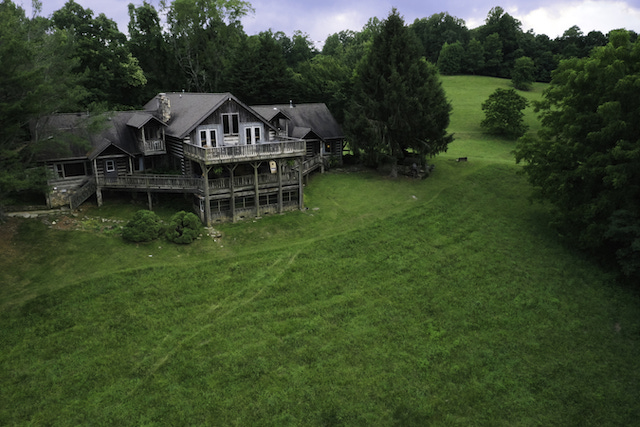
Partners Greg Mullins and Stacy Bredendieck may own the fifteen acres that comprise Winding Stair Campground and Farm, but they have a respect for the land that makes it more of a partnership, a stewardship of everything that lives and grows here. Originally Cherokee land, it changed hands after a treaty in 1819 and was later operated as a logging site from 1927 to 1939 by the Ritter Logging Company, which created a once-bustling logging community known as Rainbow Springs, complete with homes, a school, a commissary, and a post office. The land later operated as a campground until 2002, drawing droves of seasonal Appalachian Trail travelers.
Through its many iterations and identities, history has seeped into the soil, taking root to create a rich heritage. By the time the Mullins and Bredendieck bought the original ten acres of the land in 2010, it had been torn apart by developers who, in their plans to build a gated community, had razed the cabins, gutted the bathhouse, and split the property into lots. When the stock market crash sent the real estate market spiraling, all of the lots went unsold—until fate intervened.
“Greg and I had been looking for a weekend getaway in the mountains,” Bredendieck recalls. “He wanted to be on a river, and I wanted high elevation to escape the summer heat in Atlanta. Rivers are usually in valleys, so finding this land on the Nantahala River and at an elevation of 3,300 feet was a perfect fit. The property was being sold as home sites in a gated community, so we were surprised when our agent went to view the property and called to tell us that it was an old campground. Due to the real estate slump at the time, none of the lots had been sold, and the developer was in a bit of a financial bind, so we were able to buy all ten acres together.”
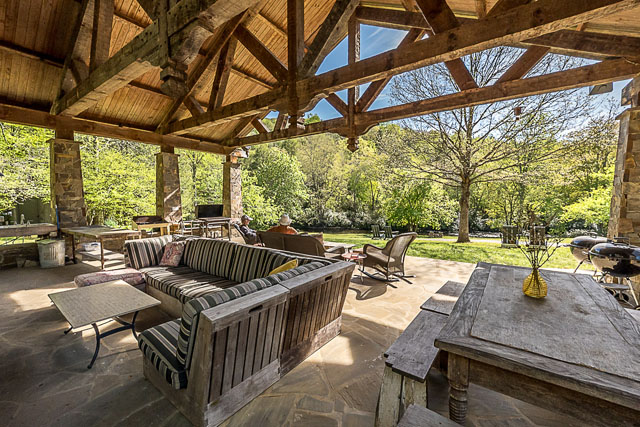
During their first few years of owning the property, Miller and Bredendieck came up and camped with friends. The first thing they built was a large pavilion, which they used as a gathering place to cook meals together and hang out around the fire during their tent-camping days. “Most of the sites were developed in response to what was needed during stays,” Bredendieck explains.
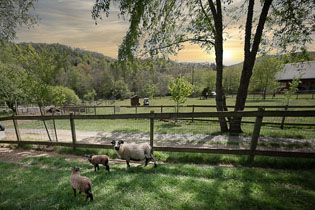
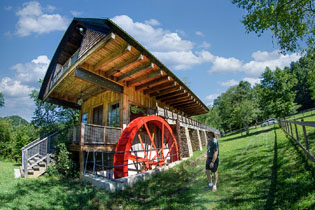
As they built each subsequent building, they did so without a master plan, adding structures organically as needs arose. Then, in 2013, they bought an adjacent five acres of overgrown land with the intention of farming the acreage. After meeting another
Fifteen years after they purchased those first ten acres of abandoned property, Miller and Bredendieck have built a flourishing enterprise in both the campgrounds and farm. And while regenerative farming is important to them, the campground helps make it financially viable—and, conversely, the activity of the farm is a draw for guests staying at the campground.
Their focus on stewardship is underscored by the way they chose to develop the land. With just ten thoughtfully designed sites—ranging from primitive camping and refined glamping to a fully furnished, standalone house as well as smaller tent sites and a communal group space reworked from former RV hook-ups—the campground minimizes environmental impact while still anticipating guests’ needs.
Naturally, their proximity to the Nantahala River plays a huge role in shaping the guest experience. “Everyone loves the river,” says Bredendieck. “We have three sites that have direct river access, but there is also a large portion of the river that is open for all guests. The sound at night is my favorite part. If you are on the second floor of River House, I love how the sound of the river bounces off the ceiling while you are sleeping. Because of the elevation of the sites above the river, even Glass House and Brass Camp sites will hear the river even though they can’t see it, and Group Lane is a long site that is open in the middle with a full view down to the river.”
While the Nantahala River is known for whitewater rafting, the campgrounds are near its headwaters. “This wide and shallow section is great for kids to play in, sitting in a tube tied to a tree or dunking to cool off after a hike,” Bredendieck notes. “The water is extremely clear, even after heavy rains, because there is no land disturbance upriver. We see kingfishers and eagles, sometimes even deer, directly down the middle of the river.”
While scenery alone is enough to draw people in, there’s more than just the river to explore, from nearby trails in the Nantahala Forest to easy drives to Franklin and Hayesville for whatever kind of outings guests prefer. For large groups, Winding Stair also offers a full campground rental—ideal for hosting a hiking or camping getaway, family reunion, or celebration. Local partnerships also offer unique off-site experiences, including Alarka Expeditions for kayaking trips, Fishtales Outfitters for fly fishing lessons or side trips to secret fishing spots, and Bigelow’s Botanical Excursions for on-site talks about the plants on the property.
At Winding Stair, the land tells its own story—one shaped by industry, interruption, and, now, careful restoration and intentional stewardship. The result isn’t just a campground or a farm, but a place where stewardship is tangible in every detail, from the spacing of the sites to the quiet rhythm of the river below. It’s an experience that leaves an impression, planting seeds of lasting connection rooted in the fundamental belief that respecting nature is inseparable from enjoying it.
Winding Stair Campground and Farm is located at 7984 West Old Murphy Road, Franklin, NC 28734. For more information, call 828.283.4182 or visit windingstaircampground.com.