A Life Reimagined
03 Feb 2026
New documentary explores the mystery of photographer and conservationist George Masa
Plateau Magazine February-March 2026
Written By: By Kristin Landfield | Images: Photos by GEORGE MASA
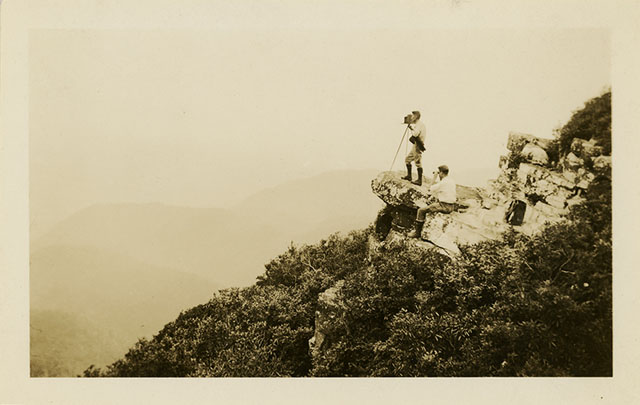
In Paul Bonesteel’s upcoming documentary on George Masa, the early 20th-century photographer, mountaineer, and conservationist lauded for his many contributions in Western North Carolina, Bonesteel offers a rich new chapter to the known history of the photographer’s storied life. It is a prequel of sorts, serving to illuminate a heretofore unknown era in Masa's life. Titled "A Life Reimagined," Bonesteel’s documentary expands the biographical canon of Japanese-born Masa, delving into the expanse of his shrouded past.
Though George Masa's legacy and extant work continue to garner interest, his life prior to the 18 years he spent in North Carolina has largely remained a mystery. It was this mystery that sparked Bonesteel's curiosity in 2000, when he encountered a 1917 photo of a smiling young Masa seated on a homemade go-kart. The image captivated Bonesteel and set him on a 25-year journey that culminates in this compelling new film.
"A Life Reimagined" opens with a poignant quotation and an even more poignant question; the relevance of each thickens as the film unfolds. First, Bonesteel quotes from Alice in Wonderland: “I almost wish I had not gone down that rabbit-hole, and yet, and yet—it’s rather curious, this sort of life," offering a hint at the depth of his own cavernous journey. Then, he asks the key question driving the entire pursuit: “What moves a person to leave all they have known for something new, something different, something adventurous? This is the question that has driven me to the other side of the planet and back, searching for the truth and story of George Masa.”
As the film proceeded, I found myself asking parallel questions about Paul himself: What drove his protracted journey into this mysterious subject? How does his assiduous quest intertwine with the evocative life of George Masa? Paul’s bond to the story deepens the film’s flavor. In the opening moments, Bonesteel discloses the heart of the narrative: it is one of seeking, of curiosity. As the piece unfolds, we likewise see it is one of redemption, how pursuing the veiled truths in our own stories shapes us, softens us, and brings out our humanity.
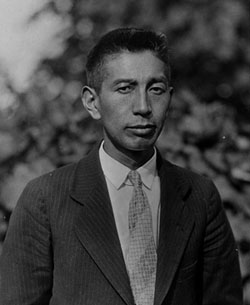
"George Masa" was born to the Takaheshi family in Japan in 1885, then adopted at age three with the name Shoji Endo. Even among Masa’s closest friends, little was known of his life prior to 1915, when he arrived by train in Asheville, North Carolina, seeking employment at the Grove Park Inn. Working his way up from the laundry, Masa soon began leading guests on hikes in the scenic area and photographing portraits and landscapes as he expanded his craft. He was sought by such elegant society as the Vanderbilts, local newspapers, and the respected naturalist Horace Kephart, who soon became his dearest friend and collaborator. Despite xenophobic persecution, the financial insecurity of the time, and physical hardship, Masa was steadfast. He established himself as a key figure in Western North Carolina's conservation and cultural locus before his death by tuberculosis in 1933.
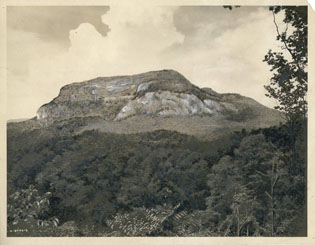
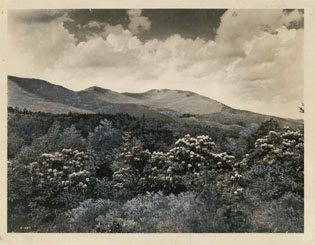
Masa has been called the Ansel Adams of the East, a title earned by his striking depictions of the Southern Appalachians—nuanced portrayals of both the environmental and cultural landscapes. Crucial in the establishment of the Great Smoky Mountains National Park and the Appalachian Trail, George Masa's sensitive and prolific images captured the magnificence of the Smokies. His self-taught crafts (photography and cartography) bore considerable impact on community leaders and philanthropists (notably John D. Rockefeller, Jr.) to preserve, in perpetuity, the 522,000-acre area from logging and development. By his ardor, Masa became a man whose posthumous legacy has exceeded that of his living recognition.
In 2009, President Obama extolled Masa, along with Horace Kephart, for their dedication to conservation and the national parks system. In 2022, a historic state marker was erected in Asheville’s Pack Square, recognizing Masa’s importance in the state's history, and making him the first person of Asian descent to receive that distinction. His legacy is best commemorated by Masa Knob, a 5,685-foot peak in Great Smoky Mountains National Park. Despite my love of the Southern Appalachians and awareness of his contemporaries, I was ignorant of Masa until diving into this documentary, which has ignited my own curiosity about his story.
Masa was a man of action, known to say, "more walk, less talk", packing half his body weight in photography equipment to find just the right shot in just the right place. He seemed to bear the weight of a mission along with that of his camera gear. It was this pure fervor that puzzled Bonesteel over Masa's past: Is there some particular history, some particular torment, driving this intriguing life? Prior to the work behind this film, much of what was known of Masa was pieced together from his meticulous notes as well as accounts from his friends, gathered retrospectively. In 2002, Bonesteel made "The Mystery of George Masa," a film in which he detailed what was known of Masaharu Iizuka, an adopted moniker that preceded his final chosen name, George Masa. Many of the questions he then raised are now the subject of “A Life Reimagined.”
What this new Bonesteel Films production (and the book from which it is rendered) achieves is important because it rewinds the story to a time before Masa arrived in North Carolina, before he donned a new life and became the esteemed George Masa. It seeks to unfold the shrouded mystery of his earlier story. Paul Bonesteel, analogous to his inspiring subject, spent over 20 years seeking insight into the film's opening question: "What moves a man..." He is quick to credit others who were critical in this venture, especially his coauthor, biographer Janet McCue. In the film, we see many collaborators, from other biographers of Masa (e.g., Macon County’s own Brent Martin), enthusiasts and collectors (Bill and Alice Hart), to genealogists, photo historians (Angelyn Whitmeyer), and scholars. They hail from such diverse locales as Asheville, Oregon, and Japan, all helping to populate the nuanced story of Shoji Endo’s life.
Along with the persistent theme of curiosity, there is a tenderness in the film that softens the facts of Masa's story. This tone sparks a human connection to him, rather than just bringing forth a sense of deep respect. Bonesteel and his collaborators carefully untangle the history of a man whose passion for nature, honor for craft, and insistence on action continue to nourish a precious wilderness and all those who meet it.
I cannot help but reflect on the empathy the filmmaker and investigators bring towards their subject—someone with whom they have fostered a relationship, rather than mere admiration. There is a sense of longing to know this lost person, much in the way we grieve and wonder about a lost friend or family member, people we wish we could have known more deeply when they were alive. The film’s theme of curiosity parleys into a theme of redemption and what it means to find hard-won peace in a life preceded by turmoil. This documentary is about human longing and resilience; it is about curiosity and devotion—reimagination—, and it is about bringing the disinfecting power of light to an unknown past. This film is a gift for anyone who knows what it means to be a seeker of solace.
Stay tuned for PBS release dates in May 2026. For more information on this moving documentary and Bonesteel’s additional films, go to www.georgemasa.com.
To see an extensive cache of George Masa’s work, view photo historian Angelyn Whitmeyer’s database: www.georgemasaphotodatabase.com