Radical by Nature
03 Dec 2025
A humble biologist seeks to understand the world
Plateau Magazine December 2025-January 2026
Written By: By Kingsley Guy | Images: Photos provided by James T. Costa
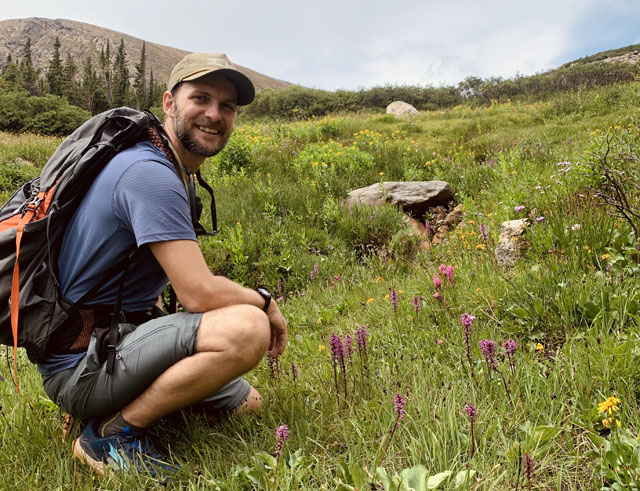
James T. Costa is a man of many accomplishments — university professor, author, administrator, and expedition leader to far-off places in the world. Yet, you also will find the executive director of the Highlands Biological Station on his hands and knees working alongside local residents as they weed invasive plant species from the station’s botanical garden.
“That’s the least I can do to show my appreciation for all the people who are volunteering their time and energy to help make this a better place,” he said.
Costa has spent the last 20 years as the head of the Highlands Biological Station, which in 2027 will celebrate its 100th anniversary. HBS, affiliated with Western Carolina University, encompasses the Highlands Nature Center museum, the adjacent botanical garden, and the laboratories, housing facilities, and academic programs that attract students and researchers from WCU and beyond.
The entire 24-acre campus is a jewel in the crown of Highlands. When walking along the forested trails and past picturesque Lindenwood Lake, visitors can lose sight of the fact that they are just a two-minute drive from bustling Main Street.
Costa, born on Long Island, received his bachelor’s degree from the State University of New York with majors in biology and philosophy. A desire to explore other parts of the country took him to the University of Georgia, where he received his master’s degree and doctorate, with a focus on entomology. That’s also where Costa met his wife Leslie, an accomplished artist with a scientific background who provided the illustrations for The Other Insect Societies, the first of Costa’s six books.
He wasn’t interested in pursuing a career at a large university that focused on research or at a small college that emphasized teaching. Costa wanted to do both, so he jumped at the job offer from the mid-sized Western Carolina University.
“WCU was a ‘Goldilocks’ location that allowed me to teach and do research,” he said. “Growing up in New York, I spent a lot of time exploring the Catskills and the Adirondacks, so the mountains of southern Appalachia attracted me to WCU as well.”
When he was just 42, university officials asked Costa to serve as the HBS interim director. He did such a good job that they soon offered him the full-time position — a post he has held for fully a fifth of the station’s nearly century of existence.
The Highlands-Cashiers Plateau, due to its geography and rainforest climate, is one of the most biologically diverse locations in the world, making it an ideal place for scientific research. Among the current projects at HBS is the study of bat behavior, an oft-maligned mammal vital to maintaining healthy ecosystems.
The station also engages in educational outreach to the community. Programs include “HBS Abroad,” in which Costa leads educational expeditions to ecologically intriguing places such as the Galapagos Islands and the Amazon. “This HBS program grew out of my leading trips for many years for other institutions, such as Harvard. Anyone is eligible to go. Unlike our student-oriented field courses, these trips are mainly for lifelong learners.” Proceeds from the expeditions support the work of HBS.
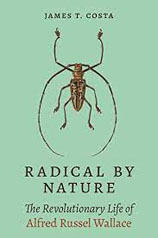
As his academic career progressed, Costa started focusing on the history of science. This motivated him to write his latest book, Radical by Nature, published in 2023 by Princeton University Press. The book deals with the life of the self-taught British naturalist Alfred Russell Wallace, who developed the theory of evolution through natural selection simultaneously and independently of Charles Darwin. Science, however, was only a part of the complex life of a man who rose from humble origins to recognition as one of the greatest naturalists of the Victorian Age.
Costa explores Wallace’s often controversial beliefs and actions, including his embrace of the Spiritualist movement. Wallace was an outspoken critic of the ill-treatment of indigenous populations by their colonial rulers, which he witnessed firsthand during his research expeditions to Asia and South America. In addition, Wallace served as a passionate advocate for women’s rights and labor and land reform to counteract the Dickensian pathologies wrought by the Industrial Revolution.
His advocacy of controversial ideas, some questionable but others ahead of their time, required great moral courage. As Costa writes in his book, “Alfred Russell Wallace is a role model for our time and beyond ….”
When this interviewer asked Costa whether he, too, is “radical by nature,” he replied:
“I can be an iconoclast, but I’m not sure how radical I am.” After a moment of reflection, Costa added, “I’m just a humble biologist trying to understand the world.”
BIO
James Costa
Professor of Biology at Western Carolina University; Executive Director of Highlands Biological Station
.» Education: Dual BS in Biology and Philosophy from SUNY-Cortland; MS and PhD in population genetics/entomology from the UGA
» Publications: 9 books, including Radical by Nature: The Revolutionary Life of Alfred Russel Wallace (Princeton University Press, 2023) and The Other Insect Societies (Harvard University Press, 2006)
.» Honors: The Stephen Jay Gould Prize of the Society for the Study of Evolution (2023) and the Alfred Russel Wallace Medal (2017)
For more information on HBS:
Highlands Biological Station
highlandsbiological.org
HBS Abroad
highlandsbiological.org/hbs-abroad-2